
Günbegi Çalışkan, Cemile
Loading...

Profile URL
Name Variants
Caliskan, Cemile Gunbegi
Çalışkan, Cemile Günbegi
Çalışkan, Cemile Günbegi
Job Title
Öğretim Görevlisi
Email Address
cemilegc@artuklu.edu.tr
Main Affiliation
Department of Medical Services and Techniques / Tıbbi Hizmetler ve Teknikleri Bölümü
Status
Website
ORCID ID
Scopus Author ID
Turkish CoHE Profile ID
Google Scholar ID
WoS Researcher ID
Sustainable Development Goals
1
NO POVERTY

0
Research Products
8
DECENT WORK AND ECONOMIC GROWTH

0
Research Products
7
AFFORDABLE AND CLEAN ENERGY

0
Research Products
17
PARTNERSHIPS FOR THE GOALS

0
Research Products
13
CLIMATE ACTION

0
Research Products
2
ZERO HUNGER

0
Research Products
4
QUALITY EDUCATION

0
Research Products
3
GOOD HEALTH AND WELL-BEING

4
Research Products
9
INDUSTRY, INNOVATION AND INFRASTRUCTURE

0
Research Products
16
PEACE, JUSTICE AND STRONG INSTITUTIONS

0
Research Products
5
GENDER EQUALITY

0
Research Products
12
RESPONSIBLE CONSUMPTION AND PRODUCTION

0
Research Products
10
REDUCED INEQUALITIES

0
Research Products
14
LIFE BELOW WATER

0
Research Products
11
SUSTAINABLE CITIES AND COMMUNITIES

0
Research Products
15
LIFE ON LAND

0
Research Products
6
CLEAN WATER AND SANITATION

0
Research Products

Documents
1
Citations
4
h-index
1

Documents
0
Citations
0

Scholarly Output
8
Articles
8
Views / Downloads
0/0
Supervised MSc Theses
0
Supervised PhD Theses
0
WoS Citation Count
14
Scopus Citation Count
15
WoS h-index
2
Scopus h-index
2
Patents
0
Projects
0
WoS Citations per Publication
1.75
Scopus Citations per Publication
1.88
Open Access Source
4
Supervised Theses
0
| Journal | Count |
|---|---|
| Applied Organometallic Chemistry | 1 |
| Bioorganic Chemistry | 1 |
| BMC Chemistry | 1 |
| BMC Complementary Medicine and Therapies | 1 |
| Chemistry & Biodiversity | 1 |
Current Page: 1 / 2
Scopus Quartile Distribution
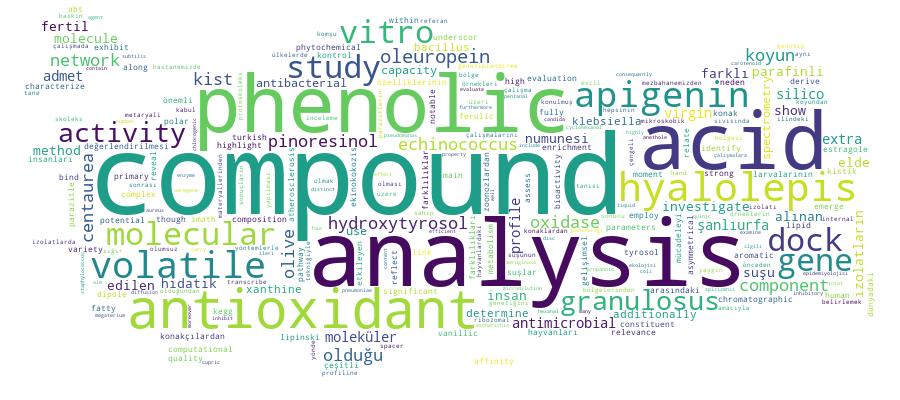
Competency Cloud
8 results
Scholarly Output Search Results
Now showing 1 - 8 of 8
Article Citation - WoS: 5Citation - Scopus: 4Comparison of Chemical and Antimicrobial Properties of Different Nanoparticles Synthesized From Verbascum X Calcicolum Hub.-Mor. Hybrid(Elsevier, 2024) Ercan, Leyla; Caliskan, Cemile Gunbegi; Kilic, Murat; Gunbegi Caliskan, CemileRecent advances in nanoparticle synthesis have led to an increase in the use of environmentally acceptable plantderived nanoparticles, given their wide range of applications. Due to their stability and several advantageous characteristics, selenium nanoparticles also stand out in these investigations in addition to metallic nanoparticles like silver, gold, iron, and zinc. These nanoparticles' favorable qualities for human health, such as antioxidant and antibacterial activities, are being studied in addition to their chemical characteristics. This investigation aimed to produce zinc oxide nanoparticles (VcZnO) and selenium nanoparticles (VcSe) from hybrid Verbascum x calcicolum Hub.-Mor. And to examine their antioxidant and antimicrobial properties. Utilizing the disk diffusion method and well methods, its antibacterial capabilities were studied. In vitro antioxidant capabilities were also assessed utilizing the DPPH, FRAP, and CUPRAC techniques. As a result, it emerged that zinc oxide nanoparticles synthesized from hybrid Verbascum x calcicolum were effective on gram-positive bacteria and gram-negative bacteria such as Staphylococcus aureus (MIC = 160 mg/ml for VcZnO), Pseudomonas aeruginosa (MIC = 80 mg/ml for VcZnO), Klebsiella pneumoniae (MIC = 40 mg/ml for VcZnO and, MIC = 120 mg/ml for VcSe), Escherichia coli (MIC = 20 mg/ml for VcZnO). While selenium nanoparticles are more favorable in terms of antioxidant capabilities, zinc nanoparticles demonstrate stronger antibacterial properties than selenium nanoparticles. Thus, it has been discovered that the use of different nanoparticles of various plants can be more efficient in different applications. It has also been found that Verbascum x calcicolum is a material that can be used successfully in nanoparticle synthesis.Article Citation - WoS: 7Citation - Scopus: 9Evaluation of Extra Virgin Olive Oil Compounds Using Computational Methods: in Vitro, Admet, Dft, Molecular Docking and Human Gene Network Analysis Study(Bmc, 2025) Unsal, Velid; Yildiz, Resit; Korkmaz, Aziz; Mert, Basak Dogru; Caliskan, Cemile Gunbegi; Oner, ErkanThis study investigates the phenolic compounds (PC), volatile compounds (VC), and fatty acids (FA) of extra virgin olive oil (EVOO) derived from the Turkish olive variety "Sar & imath; Ulak", along with ADMET, DFT, molecular docking, and gene network analyses of significant molecules identified within the EVOO. Chromatographic methods (GC-FID, HPLC) were employed to characterize FA, PC, and VC profiles, while quality parameters, antioxidant activities (TAC, ABTS, DPPH) were assessed via spectrophotometry. The analysis revealed a complex composition of 40 volatile compounds, with estragole, 7-hydroxyheptene-1, and 3-methoxycinnamaldehyde as the primary components. Hydroxytyrosol, tyrosol, oleuropein, apigenin, ferulic acid, and vanillic acid emerged as main phenolic constituents, with hydroxytyrosol and apigenin exhibiting high bioavailability. Molecular docking highlighted oleuropein and pinoresinol as compounds with strong binding affinities, though only hydroxytyrosol, apigenin, and pinoresinol fully met Lipinski and other drug-likeness criteria. DFT analysis showed that oleuropein and pinoresinol have notable dipole moments, reflecting polar and asymmetrical structures. KEGG enrichment analysis further linked key molecules like oleuropein and apigenin with pathways related to lipid metabolism and atherosclerosis, underscoring their potential bioactivity and relevance in health-related applications.Article Cytotoxic Effect of Zinc Oxide and Selenium Nanoparticles Synthesized From Orobanche Picridis on Lung Cancer as Well as Their Antimicrobial and Antioxidant Properties(Wiley, 2025) Ercan, Leyla; Caliskan, Cemile GunbegiOrobanche picridis represents a fascinating example of an obligate parasitic plant due to its lack of chlorophyll. It is of significant interest to botanists, ecologists, and biologists because of its complex parasitic lifestyle and specific host preferences. The purpose of this work was to generate zinc oxide (OrZnO) nanoparticles (NPs) and selenium (OrSe) nanoparticles from O. picridis and examine their characterization as well as their antibacterial, anticarcinogenic, and antioxidant characteristics. To this purpose, the produced NPs were characterized utilizing a scanning electron microscope, energy-dispersive X-ray spectroscopy, X-ray diffraction, and Fourier-transform infrared spectroscopy. The antimicrobial activity of OrZnO and OrSe NPs was assessed employing the disc diffusion and agar well diffusion methods, while in vitro antioxidant activity was assessed through three different assays: DPPH, FRAP, and ABTS. The MTT assay was utilized to ascertain the cytotoxicity of these nanoparticles against lung cancer, and acridine orange/ethidium bromide staining was carried out to analyze morphological and DNA alterations in these cells. Consequently, the synthesized OrZnO NPs exhibited stronger antibacterial capabilities than the OrSe NPs, while both demonstrated antioxidant properties. In addition to their potent cytotoxic action, both NPs induced apoptosis by altering the DNA and shape of the lung cancer (A549) cells.Article Citation - WoS: 1Citation - Scopus: 1Determination of Bioactive and Anti-Inflammatory Molecules of Thymbra Spicata L. from Mardin by GC-MS and LC-Orbitrap HRMS: A DFT, Molecular Docking, ADMET, Biological Target and Activity Study(BMC, 2025) Unsal, Velid; Ercan, Leyla; Caliskan, Cemile GunbegiObjectives In this study, phenolic compounds (PC), volatile compounds (VC), antioxidant, anti-inflammatory, and antimicrobial properties of the Thymbra spicata L. plant grown in the Mardin Yesilli region were investigated. The properties of compounds such as rhoifolin, leucoside, naringenin, rosmarinic acid, gamma-terpinene, and carvacrol, which were found to be higher than other compounds as a result of PC and VC analysis of Thymbra spicata L. plant, and the properties of non-steroidal anti-inflammatory drugs diclofenac and ketoprofen were compared with computer-based calculations. In this context, the Absorption, Distribution, Metabolism, Excretion, and Toxicity (ADMET) profiles of the mentioned molecules were calculated, Density Functional Theory (DFT)-based quantum chemical calculations were performed, and molecular docking analyses were performed. In addition, the pharmacological properties, biological targets, and biological activities of these compounds were comprehensively evaluated. This study provides important data for understanding the therapeutic potential of these plant components. Materials and methods Chromatographic methods (GC-MS and LC-Orbitrap HRMS) were used to look at PC and VC profiles, spectrophotometry (ABTS, DPPH, CUPRAC) to look at antioxidant activities, and the disk diffusion method to look at antimicrobial properties. Results While the most detected volatile compounds were gamma-terpinene (35.34%), carvacrol (17.55%), caryophyllene (10.53%), and p-cymene (9.15%), the most detected phenolic compounds were rosmarinic acid (3334.9 ng/mL), naringenin (2610.00 ng/mL), leucoside (1956.42 ng/mL), and rhoifolin (1288.55 ng/mL). The ethanol extract of Thymbra spicata L. stopped the growth of K. aerogenes in particular. The IC50 value for DPPH was 158.01 mu g/mL, the IC50 value for ABTS was 185.03 mu g/mL, and the C0.5A value was 87.13 for the ethanol extract of Thymbra spicata L. The molecular docking results that the strongest binding energy was between TNF-alpha and naringenin (-6.77 kcal/mol), IL-6 and rosmarinic acid (-5.55 kcal/mol), and NLRP3 and carvacrol (-6.88 kcal/mol). Naringenin, rosmarinic acid, diclofenac, and ketoprofen completely violated the restrictions established by Lipinski, Ghose, Veber, Egan, and Muegge. Rosmarinic acid is the most reactive antioxidant compound with low energy deficit (Eg) and high softness (S). gamma-terpinene and carvacrol, on the other hand, are more stable and durable wit high hardness (eta) and low softness. Conclusion Naringenin, rosmarinic acid, and carvacrol demonstrate significant anti-inflammatory and immunomodulatory properties owing to their high binding affinity for TNF-alpha, IL-6, and NLRP3, positioning them as promising candidates for the treatment of inflammatory disorders. Naringenin and rosmarinic acid effectively target TNF-alpha, whereas carvacrol demonstrates potential in the management of NLRP3 inflammasome-associated diseases. The strong binding of rosmarinic acid to IL-6 shows that it can change the immune system. Thymbra spicata L., abundant in bioactive compounds, may provide benefits compared to conventional NSAIDs and exhibit potential as monotherapy or adjunctive therapies. Their strong anti-inflammatory, antioxidant, antimicrobial, and pharmacological properties, along with their safety, make naringenin, rosmarinic acid, and carvacrol good candidates for more preclinical and clinical research.Article Verbascum Kotschyi Boiss. & Hohen. Kullanılarak Sentezlenen Çinko Oksit ve Selenyum Oksit Nanopartiküllerinin Antioksidan ve Antimikrobiyal Özelliklerinin Karşılaştırılması(Kahramanmaras Sutcu Imam Univ Rektorlugu, 2025) Ercan, Leyla; Caliskan, Cemile Gunbegi; Kılıç, Fatma MunganNanoparticle applications have been studied in many fields in recent years. Among these studies, the synthesis of nature-friendly and healthfriendly nanoparticles through green synthesis attracts much attention. These investigations also highlight the significance of several plant species, many of whose worth and traits remain unknown. The goal of this work is to create zinc oxide and selenium nanoparticles from Verbascum kotschyi Boiss. & Hohen., a plant species that hasn't received much attention, and to ascertain the antioxidant and antibacterial qualities of these nanoparticles. To accomplish this, three distinct techniques (DPPH, CUPRAC, and FRAP) were used to assess the produced nanoparticles' in vitro antioxidant capabilities after SEM, EDX, and FTIR analyses. Furthermore, the disk diffusion technique was utilized to ascertain the antibacterial efficacy of these nanoparticles against both gram-positive and gram-negative bacteria and fungus. In conclusion, V. kotschyi-derived zinc oxide nanoparticles outperformed selenium nanoparticles in terms of antibacterial activity. But when it came to antioxidant activity, selenium nanoparticles outperformed zinc oxide nanoparticles. Thus, it was determined that the products created by nanoparticle synthesis from Verbascum kotschyi have properties that can be used in different fields.Article Citation - WoS: 1Citation - Scopus: 1Phytochemical Profile, Antimicrobial, Antioxidant, Anti-Xanthine Oxidase, and Anti-Elastase Activities of Centaurea Hyalolepis: an in Silico and in Vitro Analysis(Wiley-v C H verlag Gmbh, 2025) Ercan, Leyla; Caliskan, Cemile Gunbegi; Akan, HasanThis study aimed to examine the antibacterial, antioxidant, and enzyme activity of Centaurea hyalolepis, as well as the total phenolic and carotenoid contents, and volatile and phenolic components. Gas chromatography-mass spectrometry was used for the volatile component analysis of C. hyalolepis, while liquid chromatography-mass spectrometry was used for the phenolic component analysis. Furthermore, the antimicrobial activity was evaluated using disc diffusion and microdilution techniques. The antioxidant capacity was investigated in vitro using four distinct methods (2,2-diphenyl-1-picrylhydrazyl, 2,2'-azino-bis-3-ethylbenzothiazoline-6-sulfonic acid, cupric ion-reducing antioxidant capacity, and N,N-dimethyl-p-phenylene diamine). Additionally, both in vitro and in silico studies were carried out to determine the inhibitory effect on xanthine oxidase and elastase. Consequently, it was determined that C. hyalolepis has antioxidant properties and is a highly efficient antibacterial agent against Bacillus megaterium, Pseudomonas aeruginosa, Bacillus subtilis subsp. spizizenii, Klebsiella pneumoniae, Escherichia coli, Staphylococcus aureus, Klebsiella aerogenes, and Candida albicans. Additionally, C. hyalolepis contains many volatile compounds, such as 2-methyl propanoic acid, 3,5-octadien-2-one, 2,6-dimethyl cyclohexanol, hexanal, pentanal, anethole, and beta-cyclocitral. It also has a large number of phenolic components, including chlorogenic acid, apigenin 7-glucuronide, quinic acid, and 4-hydroxybenzoic acid. Moreover, C. hyalolepis was shown to inhibit xanthine oxidase and elastase.Article Bioactive Profile, Anticarcinogenic, Antimicrobial, Antidiabetic Effects, and in Silico Pharmacokinetic Properties of Astragalus Elatus(Academic Press inc Elsevier Science, 2025) Ercan, Leyla; Akan, Hasan; Caliskan, Cemile GunbegiBecause of the numerous useful components they contain, plants are significant resources that are being explored for their varied purposes in industry, food, and medicine. Recently, particularly endemic species have gained attention with the identification of their different ingredients and characteristics and the exploration of their precious features. This research assessed the endemic species Astragalus elatus's bioactive components utilizing UHPLC-Orbitrap (R)-HRMS, its antibacterial qualities utilizing the disc diffusion method, its cytotoxic impact on cervical cancer utilizing the MTT method, and its apoptosis effect by annexin V methods. Additionally, Astragalus elatus's antidiabetic activity was revealed by in silico and in vitro examinations of its inhibitory effect on the enzymes alpha-Amylase and alpha-Glucosidase. Consequently, it was discovered that A. elatus can be utilized in the treatment of cervical cancer and has effective cytotoxic and apoptotic effects on HeLa cells. Additionally, it was detected that A. elatus possesses antibacterial and anti-diabetic properties. Compared to gram-negative bacteria, A. elatus had a greater inhibitory effect on gram-positive bacteria. The pharmacokinetically significant characteristics and their tendency for chemical reactions of this plant's primary phenolic compounds were identified by utilizing DFT, molecular docking, and ADME/T.Article Şanlıurfa İlindeki Çeşitli Konakçılardan Echinococcus Granulosus İzolatlarının Moleküler Özelliklerinin Değerlendirilmesi(2024) Çalışkan, Cemile Günbegi; Zeyrek, Fadile YıldızEchinococcus granulosus larvalarının neden olduğu kistik ekinokokozis (KE), hem insanları hem de hayvanları etkileyen dünyadaki en önemli zoonozlardan birisidir. Suşlar arasındaki ara konak farklılıkları ve gelişimsel farklılıklar parazitle mücadeleyi ve kontrol çalışmalarını olumsuz yönde etkileyebilmektedir. Bu çalışmada Şanlıurfa’nın farklı bölgelerinden ve farklı ara konaklardan elde edilen kist hidatik materyallerinden moleküler yöntemlerle genotiplendirme yapılması amaçlanmıştır. Türkiye'nin Şanlıurfa ilindeki hastanemizde tanısı önceden konulmuş 40 tane parafinli insan numunesi ve mezbahanemizden alınan 140 koyun ve 17 sığır numunesi olmak üzere 197 hidatik kist örnekleri toplanmıştır. Bu izolatlarda fertil olan 33 parafinli insan izolatı ve 80 koyundan alınan kist sıvısında mikroskobik inceleme sonrası 250 üzeri protoskoleks ve/veya skoleks çengeli olduğundan fertil kabul edildi. Echinococcus granulosus G1 suşu referans metaryali olarak kullanıldı. Bu izolatların genetiğini belirlemek amacıyla örneklerin ribozomal DNA internal transcribed spacer gene 1 (rDNA-ITS1) bölgesi PCR-RFLP tekniğiyle incelenmiştir. Aynı band profiline sahip olması sonucu izolatların hepsinin yaygın koyun suşu (G1) olduğu belirlenmiştir. Bu çalışma ile Şanlıurfa’da E. granulosus 'un evcil koyun suşunun baskın genotip olduğu gösterilmiştir. Elde edilen sonuçların bu bölge ve komşu ülkelerde hayvanlardaki parazitlerin epidemiyolojisi ve ekolojisi ile ilgili ileri çalışmalara yol göstereceği düşünülmektedir.
