
Vural Doğru, Birgül
Loading...

Profile URL
Name Variants
Vural, Birgul
Birgül Doğru Vural
Birgül Doğru Vural
Job Title
Dr. Öğr. Üyesi
Email Address
Main Affiliation
Department of Nursing / Hemşirelik Bölümü
Status
Former Staff
Website
ORCID ID
Scopus Author ID
Turkish CoHE Profile ID
Google Scholar ID
WoS Researcher ID
Sustainable Development Goals
 1
1NO POVERTY
0
Research Products
 2
2ZERO HUNGER
0
Research Products
 3
3GOOD HEALTH AND WELL-BEING
6
Research Products
 4
4QUALITY EDUCATION
0
Research Products
 5
5GENDER EQUALITY
0
Research Products
 6
6CLEAN WATER AND SANITATION
0
Research Products
 7
7AFFORDABLE AND CLEAN ENERGY
0
Research Products
 8
8DECENT WORK AND ECONOMIC GROWTH
0
Research Products
 9
9INDUSTRY, INNOVATION AND INFRASTRUCTURE
0
Research Products
 10
10REDUCED INEQUALITIES
0
Research Products
 11
11SUSTAINABLE CITIES AND COMMUNITIES
0
Research Products
 12
12RESPONSIBLE CONSUMPTION AND PRODUCTION
0
Research Products
 13
13CLIMATE ACTION
0
Research Products
 14
14LIFE BELOW WATER
0
Research Products
 15
15LIFE ON LAND
0
Research Products
 16
16PEACE, JUSTICE AND STRONG INSTITUTIONS
0
Research Products
 17
17PARTNERSHIPS FOR THE GOALS
0
Research Products

This researcher does not have a Scopus ID.

This researcher does not have a WoS ID.

Scholarly Output
8
Articles
8
Views / Downloads
61/1175
Supervised MSc Theses
0
Supervised PhD Theses
0
WoS Citation Count
56
Scopus Citation Count
70
Patents
0
Projects
0
WoS Citations per Publication
7.00
Scopus Citations per Publication
8.75
Open Access Source
6
Supervised Theses
0
| Journal | Count |
|---|---|
| Acıbadem Sağlık Bilimleri Dergisi | 1 |
| Acta Scientiarum. Health Sciences | 1 |
| Complementary Therapies in Clinical Practice | 1 |
| Cyprus Journal of Medical Sciences | 1 |
| Journal of Pakistan Medical Association | 1 |
Current Page: 1 / 2
Scopus Quartile Distribution
Competency Cloud
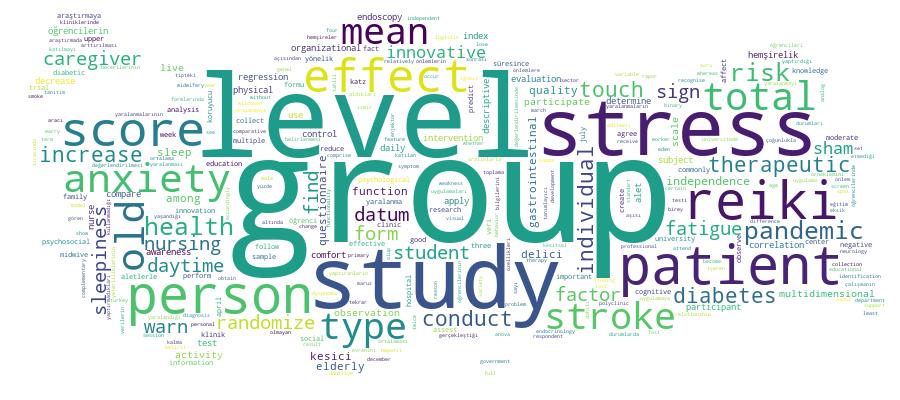
8 results
Scholarly Output Search Results
Now showing 1 - 8 of 8
Article Citation - WoS: 17Citation - Scopus: 17Effect of therapeutic touch on daytime sleepiness, stress and fatigue among students of nursing and midwifery: A randomized sham-controlled trial(Complementary Therapies in Clinical Practice, 2021) Utli, Hediye; Vural Doğru, Birgül; Şenuzun Aykar, Fisun; Dogru, Birgul Vural; Aykar, Fisun SenuzunObjectives: This study was conducted to assess the effect of therapeutic touch on stress, daytime sleepiness, sleep quality and fatigue among students of nursing and midwifery. Methods: 96 students were randomized into three groups: the therapeutic touch (TT) group, the sham therapeutic touch (STT) group, and the control group. In this randomized sham-controlled study, the TT group was subjected to therapeutic touch twice a week for four weeks with each session lasting 20 min. Results: When the TT group was compared to the STT and control groups following the intervention, the decrease in the levels of stress (p < 0.001), fatigue (p < 0.001) and daytime sleepiness (p < 0.001), and the increase in the sleep quality (p < 0.001) were found to be significant. Conclusion: It was found that TT, which is one form of complementary therapy, was relatively effective in decreasing the levels of stress, fatigue and daytime sleepiness, and in increasing the sleep quality of university students of nursing and midwifery.Article Multi-Faceted Evaluation of Psychosocial Function of Elderly Subjects(Cyprus Journal of Medical Sciences, 2022) Vural Doğru, Birgül; Utli, Hediye; Doğru, Birgul Vural; Özbay, HediyeBACKGROUND/AIMS: With aging, physical, psychological and social changes occur and individuals lose their independence and become semi-or full dependent. Accordingly, physical, psycho-social problems can be seen in the older people and their functionality decreases. For this reason, the study was carried out for the purpose of multidimensional evaluation of cognitive and psycho-social functions of older people. MATERIALS and METHODS: The study was conducted between April 2018 and November 2018. This descriptive and cross-sectional study was performed in two different family health centers in Mardin province. The research was completed with a total of 200 older people who agreed to participate in the study. The data were collected using “Patients Information Form”, “Katz Index of Independence in Activities of Daily Living (Katz ADL)” and “Multidimensional Observation Scale for Elderly Persons (MOSES)”. The number, percent, mean, Mann-Whitney U, Kruskal-Wallis test and Spearman correlation analysis were used in the data analysis. RESULTS: The mean age of participants was 70.03±8.48 years. 54.2% of older people were female and 45.8% were male. The mean score of Multidimensional Observation Scale for Elderly Persons was 24.36±22.38. The mean score of the Katz Index of Independence in Activities of Daily Living was 16.32±3.14. There was a weak positive correlation between age and Multidimensional Observation Scale for Elderly Persons (p<0.001, r=0.43), and a moderate negative correlation was found between Katz Index of Independence in Activities of Daily Living and MOSES (p<0.001, r=-0.56). CONCLUSIONS: This study revealed that older people had high functional and independence levels, and this is due to the fact that older people who come to family health care centers form a sample group. However, multidisciplinary studies periodically are needed to evaluate the cognitive, psychological and social functioning of older people living at home.Article Citation - WoS: 7Citation - Scopus: 11The Effect of Reiki on Anxiety, Stress, and Comfort Levels Before Gastrointestinal Endoscopy: A Randomized Sham-Controlled Trial(ScienceDirect, 2022) Utli, Hediye; Vural Doğru, Birgül; Dogru, Birgul VuralPurpose: This study’s aim is to determine the effect of Reiki when applied before upper gastrointestinal endoscopy on levels of anxiety, stress, and comfort. Design: This single-blind, a pretest and post-test design, randomized, sham-controlled study was held between February and July 2021. Methods: Patients who met the inclusion criteria were separated by randomization into three groups: Reiki, sham Reiki, and control. A total of 159 patients participated in the study. In the intervention groups (Reiki and sham Reiki), Reiki and sham Reiki were applied once for approximately 20 to 25 minutes before gastrointestinal endoscopy. Findings: When the Reiki group was compared to the sham Reiki and control groups following the intervention, the decrease in the levels of patient stress (P < .001) and anxiety (P < .001) and the increase in patient comfort (P < .001) were found to be statistically significant. Conclusions: Reiki applied to patients before upper gastrointestinal endoscopy was effective in reducing stress and anxiety and in increasing comfort.Article Hemşirelik Öğrencilerinde Kesici ve Delici Alet Yaralanmalarının Değerlendirilmesi(2018) Birgül Doğru Vural; Asiye Akyol; Doğru, Birgül Vural; Akyol, AsiyeAmaç: Hemşirelik öğrencilerinin klinik uygulamaları süresince kesici ve delici aletlerle yaralanmaya maruz kalma durumları ve bu durumlarda aldıkları önlemlerin belirlenmesi amaçlanmıştır.Gereç ve yöntem: Kesitsel ve tanımlayıcı tipteki çalışmanın evrenini bir üniversitede eğitim gören hemşirelik öğrencileri (N=589), örneklemini ise araştırmaya katılmayı kabul eden ve formlarında eksik veri olmayan 339 öğrenci oluşturmuştur. Araştırmada veri toplama aracı olarak; Birey Tanıtım Formu ve Kesici-Delici Aletlerle Yaralanma ile İlgili Özellikleri içeren soru formu kullanılmıştır. Verilerin değerlendirilmesinde sayı, ortalama, standart sapma, yüzde ve ki-kare testi kullanılmıştır.Bulgular: Araştırmaya katılan öğrencilerin yaş ortalaması 22,51±1,56'dir. Öğrencilerin %31'inin kesici ve delici alet ile yaralandığı, yaralanmaların çoğunlukla dahiliye kliniklerinde yaşandığı (%38,8) ve enjektör iğnesi (%72,1) ile gerçekleştiği belirlenmiştir. Yaralanma sırasında öğrencilerin %29,3'ünün koruyucu önlem kullanmadığı, %68,6'sının yaralanmayı rapor etmediği, %86,4'ünün hepatit B aşısı yaptırdığı, aşı yaptıranların %44'ünün (n=60) ise aşı sonrası tahlil yaptırmadıkları bulunmuştur.Sonuç: Öğrenci hemşireler klinik uygulama süresince kesici ve delici alet yaralanması açısından risk altında olup koruyucu önlemlere yönelik bilgilerini belirli aralıklarla tekrar edilmesi, uygulamaya yönelik becerilerinin ve yeterliliklerinin arttırılması önerilmektedir.Article Citation - WoS: 1Citation - Scopus: 2Evaluation of the organizational innovation and self-efficiency levels of health workers(Acta Scientiarum. Health Sciences, 2023) Bayram Değer, Vasfiye; Vural Doğru, Birgül; Arslan, Nurgül; Doğru, Birgül Vural; Değer, Vasfiye BayramThe aim of this study was determine whether the personal features of the participants create a difference in terms of organizational innovation. This study was conducted with 1234 nurses and midwives. A multiple regression model was created to see and predict the effect on individuals' total innovative scores and self-efficacy scores. The total innovative and the self-efficacy score are predicted with multiple regression analyses. It was observed that the variable that most affected both the total innovative score and the self-efficacy score of the individuals was the education level of the individuals. The fact that midwives and nurses have a certain level of innovative and self-confidence is important for the society to receive better and faster health services. In this study, it was observed that the education level was important for the development of innovative and self-confidence in both groups.Article Citation - WoS: 21Citation - Scopus: 30The effect of the COVID-19 pandemic on self-management in patients with type 2 diabetics(Elsevier, 2021) Utli, Hediye; Vural Doğru, Birgül; Dogru, Birgul VuralAims: The research was conducted with the aim of determining the effect of the COVID-19 pandemic on levels of self-management in individuals with type 2 diabetes. Methods: This cross-sectional descriptive type of study was conducted between 21 December 2020 and 1 April 2021. It was performed with 378 individuals with type 2 diabetes attending the endocrinology clinic and outpatients' department of a government hospital who agreed to participate in the research. In the collection of data, a Patient Identification Form, Visual Analog Scales (an Anxiety VAS and a Stress VAS), and the Diabetes Self-Management Questionnaire (DSMQ) were used. The Wilcoxon test, Independent Sample t test, One-Way Anova and binary logistic regression were used in the analysis of data. Results: The Diabetes Self-Management Questionnaire (DSMQ) total mean score of the individuals with type 2 diabetes participating in the study during the COVID-19 pandemic was 5.25 ± 1.04. Their anxiety total mean score was 0.32 ± 1.56, and their total mean stress score was 7.06 ± 1.62. Being male, over the age of 65, married and having a diagnosis of diabetes for 6-11 years, increased smoking, the COVID-19 pandemic, reduced physical activity (not walking) and support obtained from health professionals, and increased anxiety and stress levels were found to be risk factors affecting diabetic self-management. Conclusions: The findings show that the COVID-19 pandemic has had a negative effect on the self-management levels of individuals with type 2 diabetes.Article Sexual Live Changes of Women With Breast Cancer in Southeastern Anatolia, Turkey(Professional Medical Publications, 2011) Vural, Birgul; Vural Doğru, Birgül; Goz, Fugen; 09.01. Department of Nursing / Hemşirelik Bölümü; 9. Faculty of Health Sciences / Sağlık Bilimleri Fakültesi; 01. Mardin Artuklu University / Mardin Artuklu ÜniversitesiObjective: Breast cancer adversely affects women's sexual lives. This cross-sectional study was conducted to determine sexual life changes of women with breast cancer. Methodology: For data collection, patient information form, questionnaire regarding sexual changes, General Health Questionnaire and Multidimensional Perceived Social Support Scale were used. The sample consisted of 55 women with breast cancer diagnosed and treated in an Oncology Hospital. For statistical evaluation Chi-square test, Mann-Whitney U analysis, Pearson correlation test and Logistic regression analysis were applied. Results: It was detected that more than half of the women had sexual dysfunctions. Conclusion: This study results indicate that women with breast cancer need help and support about their sexual life.Article Citation - WoS: 10Citation - Scopus: 10Awareness of risk factors and warning signs of stroke among caregivers of patient with and not with stroke: Results from questionnaire(Journal of Pakistan Medical Association, 2019) Usta Yeşilbalkan, Öznur; Karadakovan, Ayfer; Vural Doğru, Birgül; Akman, Perihan; Özel, Ebru; Bozkurt, Yücel; Dogru, Birgul Vural; Borturk, Yucel; Yesilbalkan, Oznur Usta; Bozturk, YucelObjective: To assess the awareness/knowledge of stroke risk factors and warning signs among caregivers of patients with or without stroke. Methods: The cross-sectional, descriptive and comparative study was conducted in the neurology clinic and polyclinic of a university hospital in Izmir, Turkey, from March to July 2014, and comprised primary caregivers of patients with stroke in group 1 and those of patients with no stroke in group 2. The subjects were screened and data was collected using the Participant Information Form and the Questionnaire Form About Stroke. Warning signs and symptoms of stroke were compared between the two sets of caregivers. SPSS 17was used for data analysis. Results: Of the 203 respondents, 105(52%) were in group 1 and 98(48%) in group 2. Group 1 had better awareness than group 2 (p<0.05). In group 1, weakness was the most commonly recognised warning sign 101(96.2%), whereas dyspnoea 41(39%), was the least commonly identified. There was no relationship of stroke knowledge with educational level and age (p>0.05 each). Conclusions: Caregivers had a moderate knowledge of some of the warning signs and risk factors about stroke.
