Koçhan, Metin

Loading...
Profile Picture
Name Variants
Koçhan, M.
Job Title
Dr. Öğr. Üyesi
Email Address
metinkochan@artuklu.edu.tr
Main Affiliation
Department of Philosophy / Felsefe Bölümü
Status
Current Staff
Website
Scopus Author ID
Turkish CoHE Profile ID
Google Scholar ID
WoS Researcher ID

Sustainable Development Goals

SDG data is not available
This researcher does not have a Scopus ID.
Documents

0

Citations

0

Scholarly Output

2

Articles

2

Views / Downloads

6/0

Supervised MSc Theses

0

Supervised PhD Theses

0

WoS Citation Count

0

Scopus Citation Count

0

WoS h-index

0

Scopus h-index

0

Patents

0

Projects

0

WoS Citations per Publication

0.00

Scopus Citations per Publication

0.00

Open Access Source

2

Supervised Theses

0

Google Analytics Visitor Traffic

JournalCount
Abant Sosyal Bilimler Dergisi1
Hitit Theology Journal1
Current Page: 1 / 1

Scopus Quartile Distribution

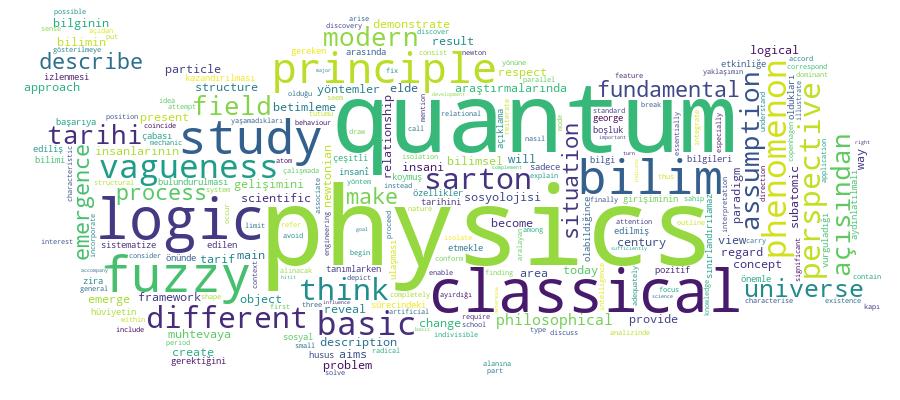
Competency Cloud

GCRIS Competency Cloud

Scholarly Output Search Results

Now showing 1 - 2 of 2
  • Article
    Description of Quantum Physics From the Perspective of Fuzzy Logic;
    (Hitit University, 2024) Koçhan, M.
    The end of the 19th century corresponds to a period in which different problem areas emerged in the field of physics, characterised as classical or modern physics, which contain different structural features that cannot be explained with the assumptions of Newtonian physics. As a result of the studies carried out to solve these problems, a new type of physics, called “-quantum physics-“, emerged at the beginning of the 20th century, based on principles different from those of classical physics. The study of the behaviour of objects in the subatomic universe was the interest of quantum physics. The atom, once regarded as indivisible by Newton, became the object of quantum physics studies, which enabled it to be broken down into smaller parts and thus penetrated. Quantum physics changed the approach of modern physics to the universe, which was based on the assumption that it consisted of fixed and completely isolated fundamental particles, and led to the emergence of the idea that relational processes, not isolation, were dominant among the particles that made up the universe. This physics discovered the existence of new phenomena in the subatomic universe that did not fit the mechanistic-deterministic approach considered characteristic of the macro-universe. The emergence of these discoveries required a radical change in the fundamental concepts of “space”, “time”, “object”, “observer”, “measurement”, “effect”, “locality” and “interaction”, which classical physics was based on. This is because the nature of the phenomena that quantum physics draws attention to in the micro-universe does not coincide with the assumptions of classical physics regarding these concepts. This non-overlapping situation is essentially because the phenomena occurring in both fields arise according to different logical schemes. Classical mechanics is based on the fundamental principles of classical logic. However, the phenomena to which quantum physics refers do not conform to the basic principles of classical logic. In this respect, the findings of quantum physics cannot be understood using the structure of thought based on classical logical principles. Today, however, it seems possible to make this interpretation from the perspective of the fuzzy logic paradigm, which puts vagueness, the main focus of quantum physics, on its agenda. Today, the concept of vagueness has been incorporated into the scientific process. Parallel to quantum theory's positioning of vagueness as a principle, fuzzy logic has also integrated vagueness in all knowledge processes and included it in its structure not as a situation to be avoided, but as a situation to be evaluated. In this sense, this study aims to demonstrate that the basic principles of quantum physics, which cannot be adequately described by the classical mode of thought shaped by the principles of classical logic, can instead be depicted from the perspective of fuzzy logic, which has created a significant area of application in the field of engineering, especially in artificial intelligence studies. In this direction, this study first discusses the process that led to the emergence of quantum physics in general and proceeds to present its basic principles based on the views of the Copenhagen School, which has become the standard view of quantum physics. After mentioning that the phenomena outlined by quantum physics cannot be described within the limits of the three basic principles of classical logic, this study presents the fuzzy logic system as it makes such a description possible. Finally, this study attempts to illustrate in which contexts the basic principles of quantum physics can be associated with fuzzy logic theory. As a result of this investigation, this study reiterates that quantum physics can sufficiently be described from the perspective of fuzzy logic. One of the main goals of revealing this relationship is to create an important basis for philosophical activity. Just as Newtonian physics, one of the major developments that determined the paradigm of modern science, was based on classical logic, and in turn, classical logic provided a framework for philosophical ways of thinking influenced by classical physics, revealing the relationship between quantum physics and fuzzy logic will indicate that fuzzy logic can provide a framework for philosophical ways of thinking that will complement quantum physics. In this respect, this study aims to demonstrate that quantum physics and fuzzy logic accompany each other in the scientific realm. © 2024, Hitit University. All rights reserved.
  • Article
    “Bilimin İnsanileştirilmesi”nden Bilim Sosyolojisine: George Sarton
    (2024) Koçhan, Metin
    Sarton, bilimi sistematize edilmiş pozitif bilgi olarak tanımlarken bilim tarihini de elde edilen bu bilginin gelişimini betimleme ve açıklama çabası olarak tarif etmiştir. Sarton, bilimin gelişimini betimleme girişiminin başarıya ulaşması açısından, bilim tarihi araştırmalarında izlenmesi gereken çeşitli yöntemler belirlemiştir. Bu yöntemler arasında göz önünde bulundurulması gerektiğini önemle vurguladığı husus bilimsel etkinliğe, insanî bir hüviyetin kazandırılması düşüncesidir. Zira Sarton açısından bilim tarihi, sadece bilim insanlarının ortaya koymuş oldukları bilgileri tarif etmekle sınırlandırılamaz, bilimsel bilginin elde ediliş sürecindeki tüm insani özellikler de olabildiğince aydınlatılmalı, bilim insanlarının sosyal bir boşluk içinde yaşamadıkları gösterilmelidir. Sarton’un bu tutumu, bilim sosyolojisi alanına da kapı aralayan bir muhtevaya sahiptir. Bu açıdan bu çalışmada Sarton’un bilim tarihi araştırmalarında yöntem analizinde bilimin insani yönüne ayırdığı yer ele alınacak, bu yaklaşımın bilim sosyolojisi açısından nasıl bir muhtevaya sahip olduğu gösterilmeye çalışılacaktır.